agile, scrum, team leading, coaching, training, project management
Showing posts with label product development. Show all posts
Sunday, 31 May 2020
Product development – master the game
Last week we were in the zone… the “Product development” zone. For a whole week EPAM's focus and energy were mainly on sessions and workshops about products, business and success. Brilliant minds from all around the globe shared their fascinating experience and knowledge, teaching those - hungry and eager to develop great products and conquer the world. My humble contribution was a workshop, dedicated to Product owners, and everybody interested in improving their mindsets and knowledge about great products’ development, marketing and business success.
The participants had to design their own product from scratch, elaborating vision, roadmap, backlog and strategy, and then present it to ask for feedback and decide on changes or even a complete pivot. As usual, I will be sharing some of the content we covered below.
Starting with a research presented by Bull Gross on the ‘Top factors for company (and product) success.’ It covers the inconvenient truth – no money, idea, or business model could guarantee product’s success, nothing can save you if the timing is not right and the execution is bad.
Moving to Peter Teal’s ideas and beliefs “All happy companies are different – each one earns a monopoly by solving a unique problem.” At the same time “All failed companies are the same – all of them failed to escape competition.”
Discussing and elaborating on Michael Porter's generic strategies (on business and product development).
- Cost Leadership – targeting broad market by offering the lowest possible price.
- Differentiation – targeting broad market and providing unique product and service. Success comes as your clients would be happy to pay premium to use your products.
- Cost Focus – targeting a niche market and offering the lowest possible price.
- Differentiation Focus – producing unique features for a niche market. Strong brand loyalty among customers should be top priority.
On the topic of the ‘effective feedback’ it is important to never be satisfied with a surface-level feedback. Dig deeper, observe hidden feedback and ask precise questions to uncover the truth. Observe your product’s users very carefully. Are they excited, when playing with your product? How do they use the features? What do they spend money on?
Learn to ask laser-sharp questions
- What exactly did you like about the product, and why?
- Which feature are you going to start using immediately?
- What is your main issue / pain-point?
- What about it made you feel ‘wow’?
The ‘Agile planning onion’ could be a trap for the inexperienced Product owner. If you notice most of your day, energy and effort go towards solving mundane issues, problems and dramas – you might be losing the big picture in mind. And the vision should be your top priority and you are the person to be reminding and driving everybody, every day, every hour and minute towards achieving it.
The people in the group were fantastic - active, full of energy and willing to learn, get better and kick ass with their products. We all had a lot of fun - designing, scoping and executing on products... to master the game of product development.
Friday, 16 June 2017
Business storytelling
'The most powerful person in the world is the storyteller.'
- Steve Jobs
Hi guys, it was great to attend a storytelling workshop (@EvgeniMitev) and would be sharing my
notes below:
I. Basic rules and structure
- Should have mystery and unexpected ending.
- Hunger for dramatic event, conflict and twist.
- Share some wisdom in the end.
'Our personal stories are subject to plotting laws.'
II. High view
- Convey knowledge, info and values through story.
- Need to inspire on all levels.
- Not everything could be communicated by images .
- The resource of time is more valuable nowadays - to hold attention.
Ask yourself:
- Why do I want to communicate something?
- What do I want to communicate?
- How do I want to communicate it?
When you read something, you read it with your own tone of
voice.
Attitude:
- I'm eager to tell you
- You won't believe what happened to me
- I would not tell everybody (create trust)
---
Good exercise is
the elevator pitch: spark interest in under 30 secs.
Mission, vision, values have to be communicated properly.
Get feedback and learn from mistakes/difficulties.
'Facts and numbers do talk ... but facts and numbers can't inspire people.'
Don't just show the numbers! Tell the story. Data need
context and story, imagination and soul.
Storytelling activates both left and right hemispheres of
the brain.
III. Forms
- Insights.
- Open-ended stories.
- Serious games - to be used in business environment (online or offline).
- Could be a case study, and challenge the participants.
- Personal stories with key emotion.
- Jokes. The humor introduces surprise - that's why the brain react good on it.
---
The idea of the story is to create cycle:
'Inform - inspire - provoke action - get feedback - provoke
change/transformation'
IV. Tools
Canvas and basic structure:
---
Star Wars is amazing example of good storytelling. The
structure is:
- Show the worst moments, what happened and how bad it was. It brings the power of context.
- From bad to worse paradigm. Has to be really well described.
- Action - conflict, struggle, pain.
- Resolution - good or bad ending.
RISK is what is important.
'Each action in risk creates value'
- Stories could end without resolution, just getting worse and finish.
- Many authors use structured approach - practicality and results.
- Reframing is a good technique to be used with difficult situations.
- Deframing, also used: zoom in - zoom out.
- Creating context is very important - may use story cube dice to create context.
V. Skills
- Ask good questions.
- Listen carefully in order to tell good stories.
- Simplicity and clarity in storytelling.
- Empathy (it's all about emotions).
- Know your weaknesses and use them them to puzzle yourself and the audience.
VII. Guidelines
- Write down interesting stuff happening around you (also jokes, strange situations).
- Have to notice and be radically honest.
- Simplicity - make your stories simple to comprehend.
- Talk about and convey your values.
- Aim for greatness. Teach yourself the difference between good and great.
- Be vulnerable and honest. Share mistakes, fails, challenges.
- Research your inside monologue. What does it, what is the tone, who of you inner characters talks at different moments.
- Change the story you tell to yourself.
- Share the turning moments in your life.
- Write down the wisdom out of them and reformulate all useful actions.
- Gather images which touch you. (they show your authenticity - what is important for you)
- Research an image bank to investigate how the 'searching, labeling and tagging' works.
Thursday, 2 July 2015
Hire ‘milkshake’ to do the job
I’ve been attending a ‘Product Development’ course and a memorable video was presented yesterday:
Clayton Christensen is looking at a product from a different and magnificent (at the same time) perspective. It seems one of the major parts in product development is to find out – 'what sort of job the clients are expecting to be done by the product'. Truly ingenious…
I searched and read some articles, and also gathered some of the best quotes from Professor Clayton M. Christensen. Enjoy:
“Decide what you stand for. And then stand for it all the time.”
“I had thought the destination was what was important, but it turned out it was the journey.”
“People don’t want to buy a quarter-inch drill. They want a quarter-inch hole.”
“It's easier to hold your principles 100 percent of the time than it is to hold them 98 percent of the time.”
“Because if the decisions you make about where you invest your blood, sweat, and tears are not consistent with the person you aspire to be, you’ll never become that person.”
“In our lives and in our careers, whether we are aware of it or not, we are constantly navigating a path by deciding between our deliberate strategies and the unanticipated alternatives that emerge.”
“Resources are what he uses to do it, processes are how he does it, and priorities are why he does it.”
“You can talk all you want about having a clear purpose and strategy for your life, but ultimately this means nothing if you are not investing the resources you have in a way that is consistent with your strategy. In the end, a strategy is nothing but good intentions unless it's effectively implemented.”
“In order to really find happiness, you need to continue looking for opportunities that you believe are meaningful, in which you will be able to learn new things, to succeed, and be given more and more responsibility to shoulder.”
“…I came to understand that while many of us might default to measuring our lives by summary statistics, such as number of people presided over, number of awards, or dollars accumulated in a bank, and so on, the only metrics that will truly matter to my life are the individuals whom I have been able to help, one by one, to become better people.”
“If you defer investing your time and energy until you see that you need to, chances are it will already be too late.”
Saturday, 24 January 2015
Evolution of auto dashboards & clusters
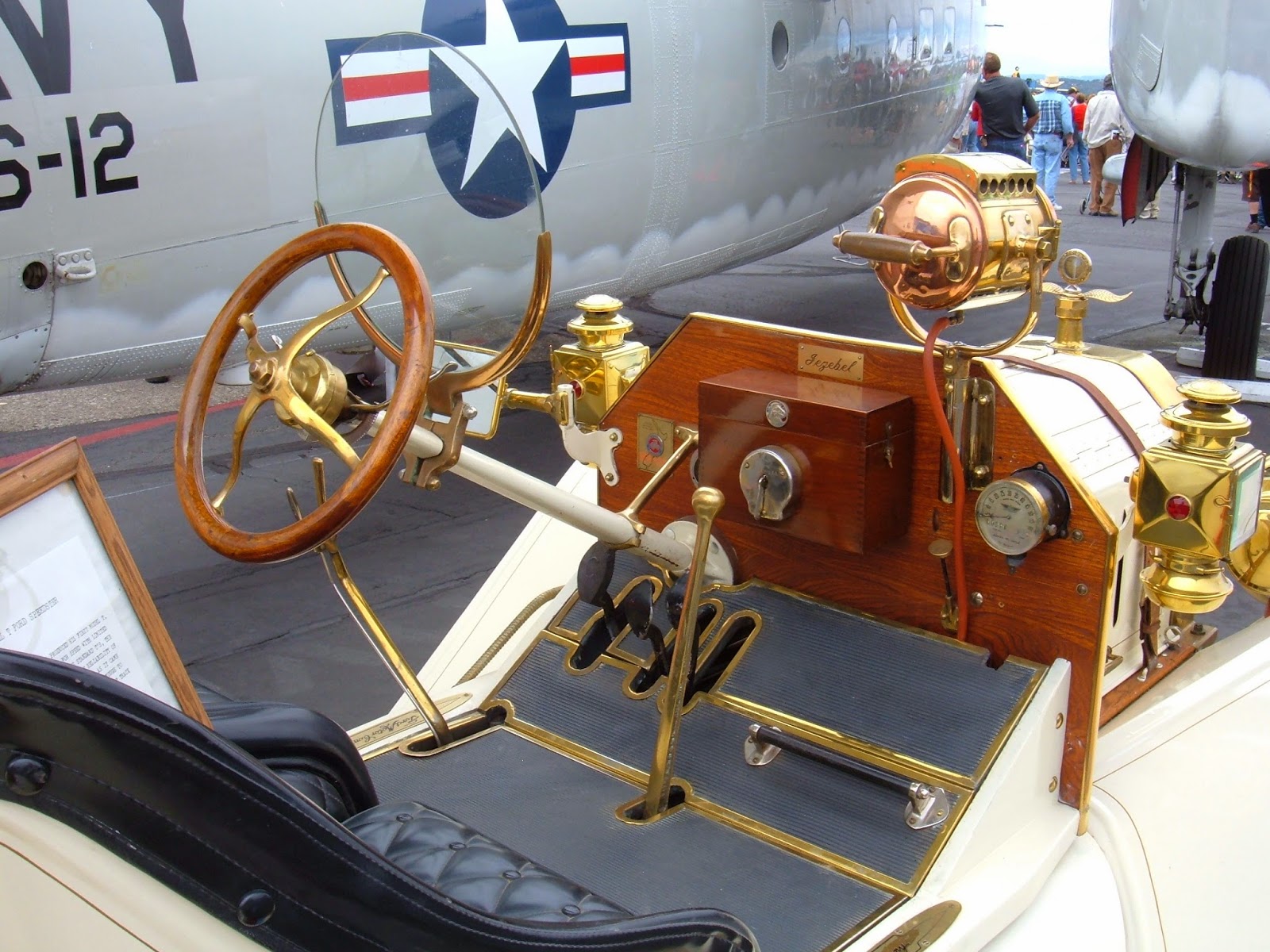
Ever since I started supporting teams developing software for the automotive industry I became obsessed with auto clusters and dashboards. In this post I will upload short visualization of the evolution of the auto dashboards and clusters. I preselected a couple of the most interesting dashboards I dug in the internet and the collection is just amazing. Have a look and let me know what you think in the comments.
1909 Ford Model 'T' Touring Car
1913 Ford Model 'T' Speedster
(the first auto 'dashboard' ever)
1913 Ford Model 'T' Touring
1928 Chrysler Plymouth Model Q
1928-1932 Ford Roadster Pickup
1930 Bentley 8 Litre
1982 Lancia Orca
1930 Bentley 8 Litre
1931 Bugatti 51
1933 Pierce Arrow Unbridled Good Taste
1937 BMW 328
1940 TATRA T87 Sedan Czechoslovakia
1950 Oldsmobile Futuramic 88 and Gauge Cluster
1956 Mercedes Benz 300SL
1957 Chevrolet
1960 Ferrari 250GT Cabriolet
1963 Chevrolet Testudo
1963 Maserati 5000 GT
1965 Ford Thunderbird Center Console
1967 Sunbeam Tiger
1972 Maserati Boomerang
1976 Rover SD1 Vitesse V8 3500 Twin
1980 Ford Replica Truck
1983 Citroen GSA Pallas
1985 Citroen BX
1998 Toyota Supra Turbo Triplets
2001 Spyker C8
2003 Honda Civic (custom)
2009 Lexus LFA
2009 Toyota Yaris Sedan 4 SPD
2012 Audi A7 Sportback (Night Vision Assistant)
2012 Pagani Huayra
2013 Mercedes Benz S Class
Future: Lexus Concept
Future: Mercedes Head-Up Concept
Future: Mitsubishi Concept
Future: Panasonic Concept
Future: Suzuki Maruti R3 Concept
Future: Toyota Concept
Future: Volvo Universe Concept
Some of the future concepts might actually be already implemented or in production. If you are interested in specific models or technologies related to the clusters let me know and I'll research them.
p.s. All images are copyright to their respective owners
Subscribe to:
Posts (Atom)